A Federal Judge Ruled Duarte Nursery Broke the Clean Water Act by Tearing Up Protected Wetlands. It Paid $1.1 Million to Settle.
The Justice Department says the company’s own consultant had warned that ripping the land without a permit could bring significant penalties. In a 2017 TV interview about the Army Corps of Engineers’ case against him, John Duarte said: “These guys are a carload of idiots and they’re evil.”
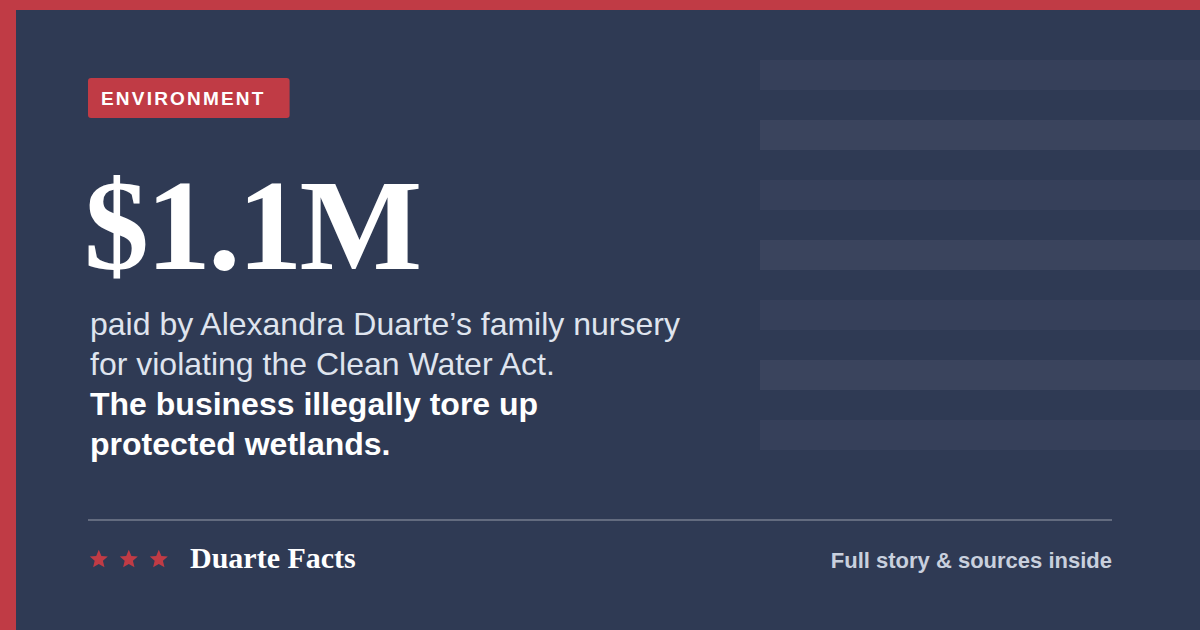
In 2012, Duarte Nursery bought about 450 acres of grassland south of Red Bluff, land dotted with vernal pools and laced with streams that feed the Sacramento River. Its own environmental consultant warned that tearing up the ground without a federal permit could bring significant penalties, the Justice Department says. The company did it anyway, ripping the whole property, wetlands and streams included, to plant wheat.
A federal judge ruled that the work broke the Clean Water Act. The land had been used only for grazing for more than two decades, so plowing it was not the kind of ongoing farming the law exempts. Duarte Nursery paid $1.1 million to settle. John Duarte, the nursery’s president at the time, called the government’s case baseless, and as a congressman he later backed a bill that would make permits to fill wetlands harder to challenge. His wife, Alexandra Duarte, is now running for the State Senate.
What happened
The property held vernal pools, seasonal wetlands, and streams that feed the Sacramento River, waters the court later found were covered by the federal Clean Water Act. According to the Justice Department, the company’s consultant warned that ripping the land without a permit from the Army Corps of Engineers could bring significant penalties. Ripping breaks up soil with metal shanks pulled behind a tractor. The company then hired a contractor to rip the entire property, including its streams and wetlands, to plant wheat, the department said. John Duarte had hoped eventually to plant high-value crops such as vineyards or nut trees on the land, E&E News reported. In February 2013, the Corps ordered the work stopped.
The court case
Duarte Nursery responded by suing the Corps, arguing it had been denied due process. The government countersued under the Clean Water Act. In June 2016, U.S. District Judge Kimberly Mueller ruled for the government. She found the work did not qualify for the act’s exemption for ongoing farming, because the land had been used only for grazing from 1988 until 2012.
That ruling settled whether the company had broken the law; a trial was still needed to decide how much it would pay. The government sought $2.8 million in penalties. In August 2017, before that trial, the company settled. It agreed to pay a $330,000 civil penalty and buy $770,000 in vernal pool mitigation credits, $1.1 million in all, to account for 22 acres of disturbed streams and wetlands, and to permanently protect creeks on the property. Like many settlements, the agreement did not include an admission of liability, even though the judge had already ruled against the company.
What was at stake
Each winter, shallow pools form in the grasslands of California’s Central Valley. They fill with rain, and by summer they are dry. California’s Department of Fish and Wildlife calls these vernal pools “some of the most ecologically important and distinctive areas in California.” They are also disappearing: the department estimates that close to 90% of the Central Valley’s vernal pool habitat has been lost, and that the pools that remain support rare plants and animals, many listed as threatened or endangered.
Their value reaches well beyond the rare species that live in them. In the wet season, water collects in the pools and in the shallow soil beneath them, then moves downhill through grassy swales into creeks. Scientists who tracked these landscapes in the Sacramento Valley found that they are “a prominent source of streamflow to downgradient waters” and have “direct and important influences on the natural flow regime of the Sacramento River,” California’s largest river. The grasslands that hold the pools also hold carbon. Unlike forests, California’s grasslands store most of their carbon underground, in roots and soil, which makes them a more reliable carbon sink than trees in an age of drought and wildfire, a UC Davis study found. Plowing that grassland under for crops can release it. A 2021 study of Midwest farmland found that converting grassland to cropland increased losses of soil and carbon. When that carbon leaves the soil, it enters the air as carbon dioxide, which the Environmental Protection Agency calls the primary greenhouse gas emitted through human activities. That warming feeds the hotter summers, deeper droughts, and longer fire seasons Californians already live with. Carbon left in the ground stays out of the air.
The federal Clean Water Act protects many of the vernal pools that remain, with one major exception for agriculture. The law lets farmers keep plowing land they are already farming without a permit. But according to the Environmental Protection Agency, that exemption does not cover “bringing a wetland into agricultural production.” Turning untouched wetlands into new cropland takes a permit first. Duarte Nursery was not the first to test that line. In the Borden Ranch case, crews pulled plow shanks behind bulldozers through wetlands on a Central Valley ranch to convert pasture to vineyards and orchards; federal courts upheld the fines, and a divided U.S. Supreme Court left that ruling in place in 2002.
John Duarte’s fight
John Duarte fought the case in public. In a June 2017 interview with KRCR-TV about the Army Corps of Engineers’ case against him, he said the work was typical wheat farming, and the station reported that he called the case baseless. “These guys are a carload of idiots and they’re evil and they’re destroying jobs and destroying lives,” he said. That year, according to The Lever, Duarte Nursery paid an outside firm $30,000 to lobby on “Issues relating to the Clean Water Act.”
As a congressman, Duarte cosponsored the Creating Confidence in Clean Water Permitting Act, H.R. 7023, which The Lever reported would shorten the window for challenging dredge-and-fill permits and limit when courts can revoke them.
The candidate
Alexandra Duarte, a Republican, is running for California State Senate District 4 on the Nov. 3, 2026, ballot. She is married to former Rep. John Duarte, who has served as the nursery’s president. She was not a party to the case.
Before the June primary, her campaign website addressed water and the environment. Under “Water,” it said: “Farmers are the lifeblood of our community, but the radical left politicians continue to demonize them in the name of extreme environmentalism.” Its homepage said she would “stop radical environmentalists from letting our forests burn.” Neither appears in the text of her website today, though the second still appears in the description her Issues page gives search engines. See how her campaign’s message changed after the primary.
Sources
- U.S. Department of Justice, settlement announcement and consent decree, United States v. Duarte Nursery Inc. (Aug. 15, 2017)(opens in new tab)
- Capital Press, “Settlement reached in Duarte Clean Water Act lawsuit” (Aug. 15, 2017)(opens in new tab)
- Texas A&M AgriLife, summary of Duarte Nursery v. U.S. Army Corps of Engineers ruling (July 11, 2016)(opens in new tab)
- HuffPost, “He Paid $1 Million For Destroying Wetlands. Now He’s Fighting Clean Water Rules In Congress.” (February 2023)(opens in new tab)
- Pacific Legal Foundation, case page: Duarte Nursery v. U.S. Army Corps of Engineers(opens in new tab)
- Alexandra Duarte for State Senate, homepage, archived Feb. 26, 2026 (Internet Archive Wayback Machine)(opens in new tab)
- U.S. Department of Justice, “Long-Running Clean Water Act Dispute Ends, Duarte Agrees to Pay Civil Fines, Restore Streams and Wetlands” (Aug. 15, 2017)(opens in new tab)
- KRCR-TV, Cristina Davies, “Farmer facing $2.8 million fine claims no damage was done to his land” (June 17, 2017)(opens in new tab)
- The Lever, Katya Schwenk, “A Water Wrongdoer’s Revenge” (April 9, 2024)(opens in new tab)
- California Department of Fish and Wildlife, “California’s Vernal Pools”(opens in new tab)
- U.S. Environmental Protection Agency, “Clean Water Act Section 404 and Agriculture”(opens in new tab)
- California Planning & Development Report, “Sacramento Developer Loses Clean Water Act Case At High Court” (Dec. 16, 2002), on Borden Ranch Partnership v. U.S. Army Corps of Engineers(opens in new tab)
- E&E News (Greenwire), Jeremy P. Jacobs, “Regulatory showdown in Calif. wheat field” (Feb. 4, 2016)(opens in new tab)
- U.S. District Court, Eastern District of California, Duarte Nursery, Inc. v. U.S. Army Corps of Engineers, order on cross-motions for summary judgment (Judge Kimberly J. Mueller, June 2016)(opens in new tab)
- Stepchinski, L.M., Rains, M.C., Lee, L.C., et al., “Hydrologic Connectivity and Flow Generation from California Vernal Pool, Swale, and Headwater Stream Complexes to Downstream Waters,” Wetlands 43, 34 (2023)(opens in new tab)
- UC Davis, Kat Kerlin, “Grasslands More Reliable Carbon Sink Than Trees” (July 9, 2018), on Dass et al., Environmental Research Letters (2018)(opens in new tab)
- Zhang, X., Lark, T.J., Clark, C.M., Yuan, Y., LeDuc, S.D., “Grassland-to-cropland conversion increased soil, nutrient, and carbon losses in the US Midwest between 2008 and 2016,” Environmental Research Letters 16, 054018 (2021)(opens in new tab)
- U.S. Environmental Protection Agency, “Overview of Greenhouse Gases: Carbon Dioxide Emissions” (“Carbon dioxide (CO2) is the primary greenhouse gas emitted through human activities.” … “land-use changes also emit CO2.”)(opens in new tab)
Lawsuit allegations are claims, not findings, unless a court ruled. See something wrong? How to request a correction.
Read more: Alexandra Duarte for Senate: the full record
More from the record
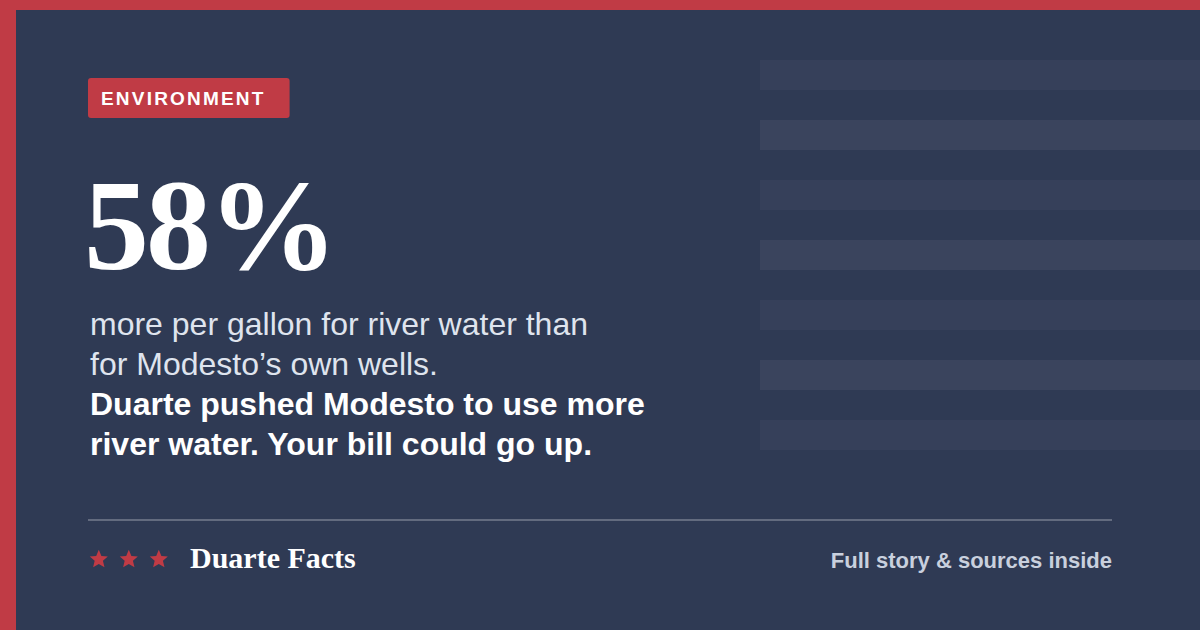
Alexandra Duarte’s Mail Promises Affordable Groceries by “Securing Water for Farms.” As President of an East-Side Growers’ Group, She Fought Cuts to Their Groundwater and Took Aim at Cities’ Share.
Letters Duarte signed in August 2025 and January 2026 objected to a plan cutting groundwater pumping by farms east of Modesto by about two-thirds, called it “discriminatory,” and argued cities get a “double dip.”
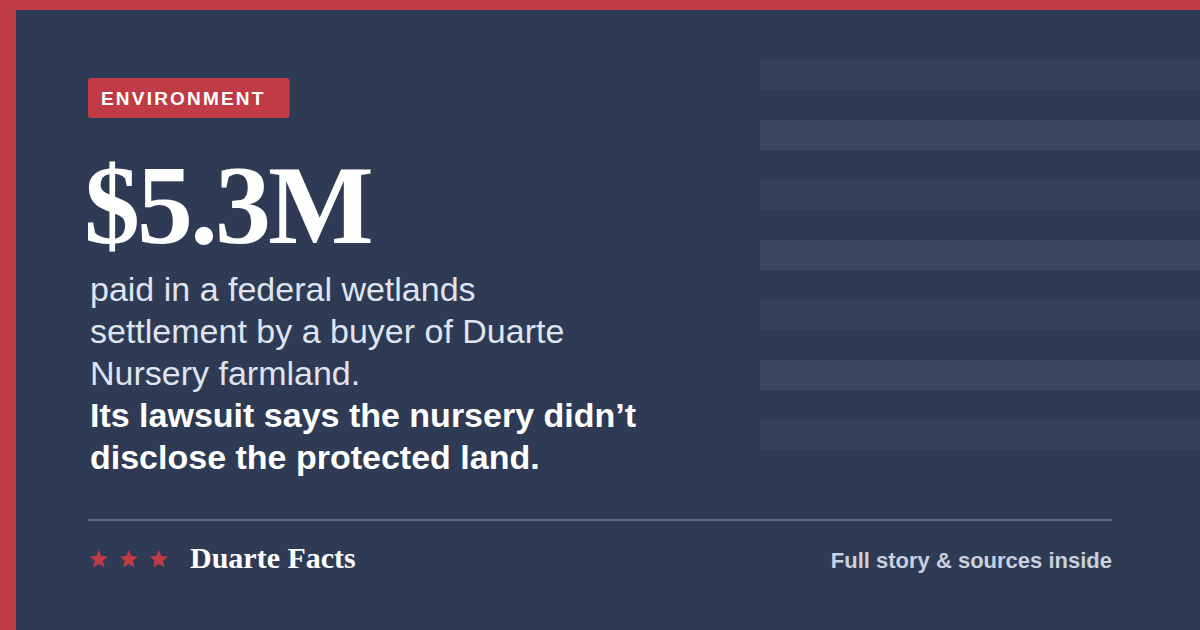
The Company That Bought 1,500 Acres From Duarte Nursery Paid $5.3 Million Over Wetlands. Its Lawsuit Says the Nursery Didn’t Disclose the Land’s Environmental Restrictions.
The federal penalties were for Goose Pond Ag’s own work on the land. Its 2019 lawsuit against Duarte Nursery makes allegations, not court findings, and we have not confirmed how the case ended.
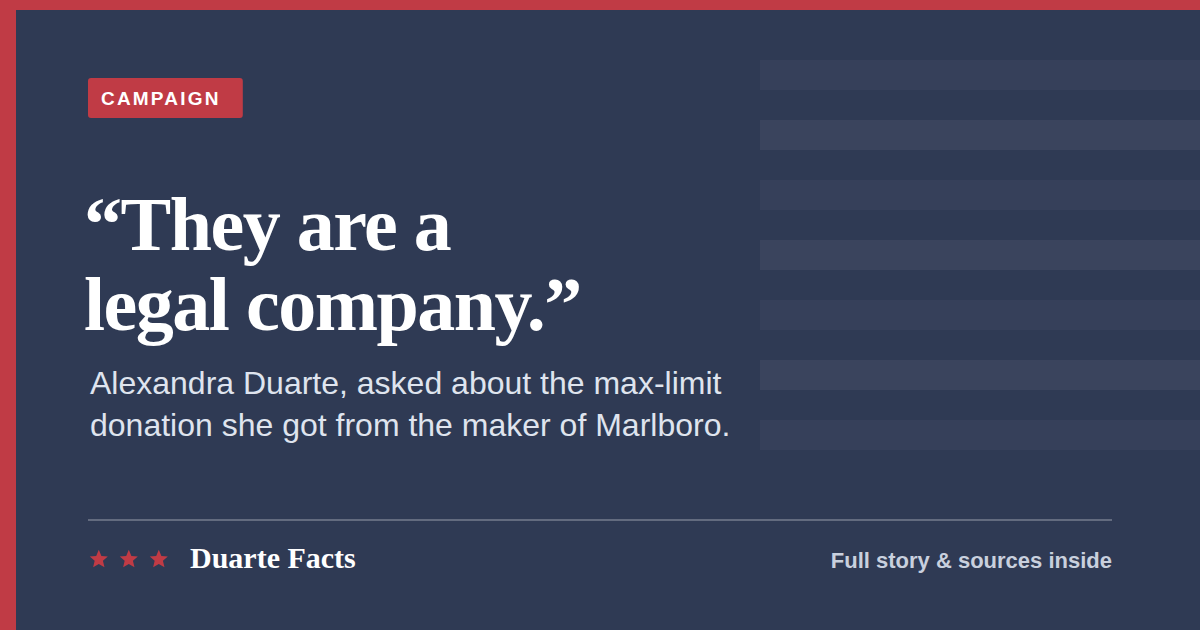
Who’s Paying for Alexandra Duarte’s Campaign? Start With Big Tobacco.
Philip Morris USA, the maker of Marlboro, gave Duarte the $5,900 maximum while a vaping bill its lobbyists worked on was pending. Nine donors with records of misconduct or a stake in what Sacramento decides have given her campaign $45,400.